
If you have ever stumbled upon tiny, adorable crocheted animals, playful plush objects, or whimsical fantasy creatures with oversized heads and sweet expressions, you have already met the world of Amigurumi. Originating in Japan, this unique branch of crochet has taken the international craft community by storm, turning simple skeins of yarn into charming, three-dimensional art.
What is Amigurumi?
The word Amigurumi (pronounced ah-mee-goo-roo-mee) comes from a combination of two Japanese words:
-
Ami (編み): Meaning crocheted or knitted.
-
Nuigurumi (ぬいぐるみ): Meaning stuffed doll.
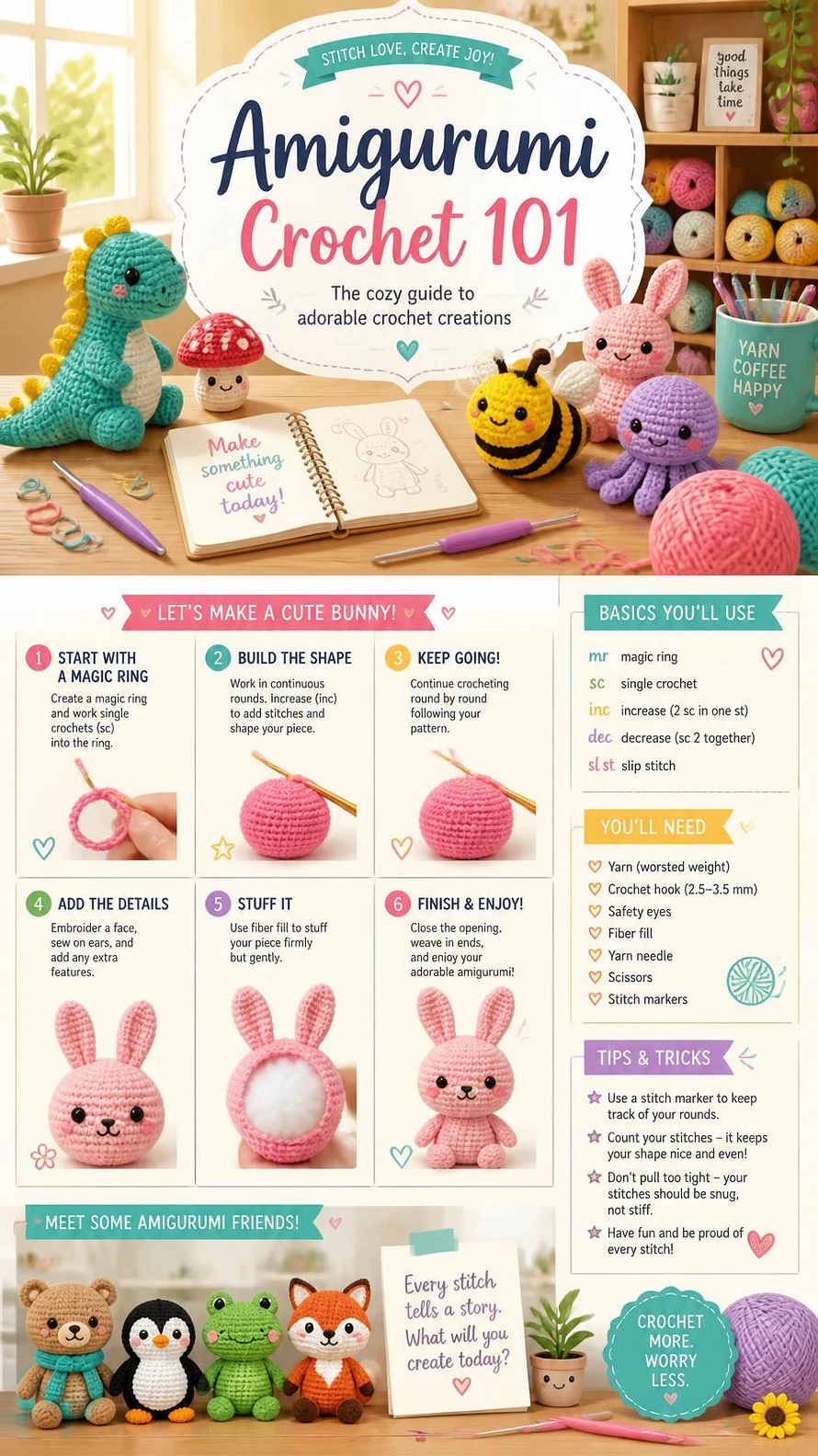
While amigurumi can be made using knitting needles, the vast majority of makers use crochet. The technique relies on crafting continuous round stitches to create hollow, sculpted shapes that are stuffed with fiberfill to give them structure and personality.
A Brief History & Global Craze
Rooted in Japan’s long-standing tradition of textile crafts, modern amigurumi truly took off in the mid-to-late 20th century alongside the rise of Kawaii (cute) culture—the same aesthetic movement that brought us characters like Hello Kitty.
With the growth of the internet, photo sharing, and digital craft marketplaces in the early 2000s, amigurumi transformed from a regional craft into a global phenomenon. Today, millions of crafters around the world share patterns, video tutorials, and handmade creations online.
How Amigurumi Differs from Traditional Crochet
While traditional crochet is often used for flat, fluid projects like blankets, scarves, and garments, amigurumi is essentially yarn sculpture. It relies on specific techniques:
-
Continuous Spiral Rounds: Instead of joining each row with a slip stitch, amigurumi works in a continuous spiral, eliminating visible seams.
-
Dense Single Crochet Stitches: The primary stitch used is the simple single crochet ($sc$). Working tightly ensures there are no gaps for the stuffing to poke through.
-
Slightly Smaller Hooks: Crafters typically use a hook that is $1$ to $2\text{ mm}$ smaller than the recommended size printed on the yarn label to keep the tension firm and uniform.
Essential Tools for Amigurumi Beginners
Starting your amigurumi journey requires only a few basic supplies:
-
Yarn: Cotton yarn offers crisp stitch definition, while plush chenille or velvet yarn creates ultra-soft, huggable plushies.
-
Crochet Hook: Usually ranging between $2.0\text{ mm}$ and $3.5\text{ mm}$ depending on yarn weight.
-
Polyester Fiberfill: Lightweight polyester stuffing used to shape the plushie.
-
Safety Eyes: Plastic backing eyes that snap securely into place before the plushie is closed.
-
Stitch Markers & Tapestry Needles: Crucial for keeping track of continuous rounds and sewing limbs onto the body.
Why People Love Amigurumi
-
Mindful & Relaxing: The rhythmic repetitive motion of repetitive stitches offers a meditative escape from screen time.
-
Fast & Rewarding: Unlike large blankets that take months, small amigurumi projects can often be completed in a single afternoon or weekend.
-
Heartfelt Gifts: A handmade plushie carries personal touch and sentimental value that mass-produced toys simply cannot match.
-
Thriving Small Business Potential: Creatives can monetize their skills by selling finished handmade dolls at craft fairs or digital PDF patterns online.
Final Thoughts
Amigurumi is more than just a craft; it is an accessible, creative gateway into toy making. Whether you are crafting a tiny bear keychain, a sprawling octopus, or your favorite cartoon character, all it takes is a single hook, a ball of yarn, and a little bit of patience to bring your imaginative creations to life